
The philanthropic sector is experiencing a fundamental shift in how foundations approach grantmaking and impact creation. Traditional models of individual foundation funding are increasingly giving way to collaborative approaches that pool resources, share decision-making, and amplify impact through strategic partnerships. This transformation reflects a growing recognition that many of today's most pressing social challenges require coordinated efforts that transcend the capacity of any single organization.
Collaborative funding models—encompassing pooled funds, foundation partnerships, and co-funding initiatives—represent more than just a trend; they embody a philosophical evolution in how philanthropic organizations understand their role in creating lasting social change. By combining financial resources, expertise, networks, and influence, foundations are discovering that partnership can achieve outcomes that would be impossible through isolated efforts.
This comprehensive examination explores the landscape of collaborative funding, from the practical mechanics of establishing partnerships to the strategic frameworks that ensure successful outcomes. We'll investigate real-world examples of transformative collaborative projects, analyze the benefits and challenges inherent in shared funding models, and provide actionable guidance for foundations considering partnership opportunities.
Understanding the Collaborative Funding Landscape
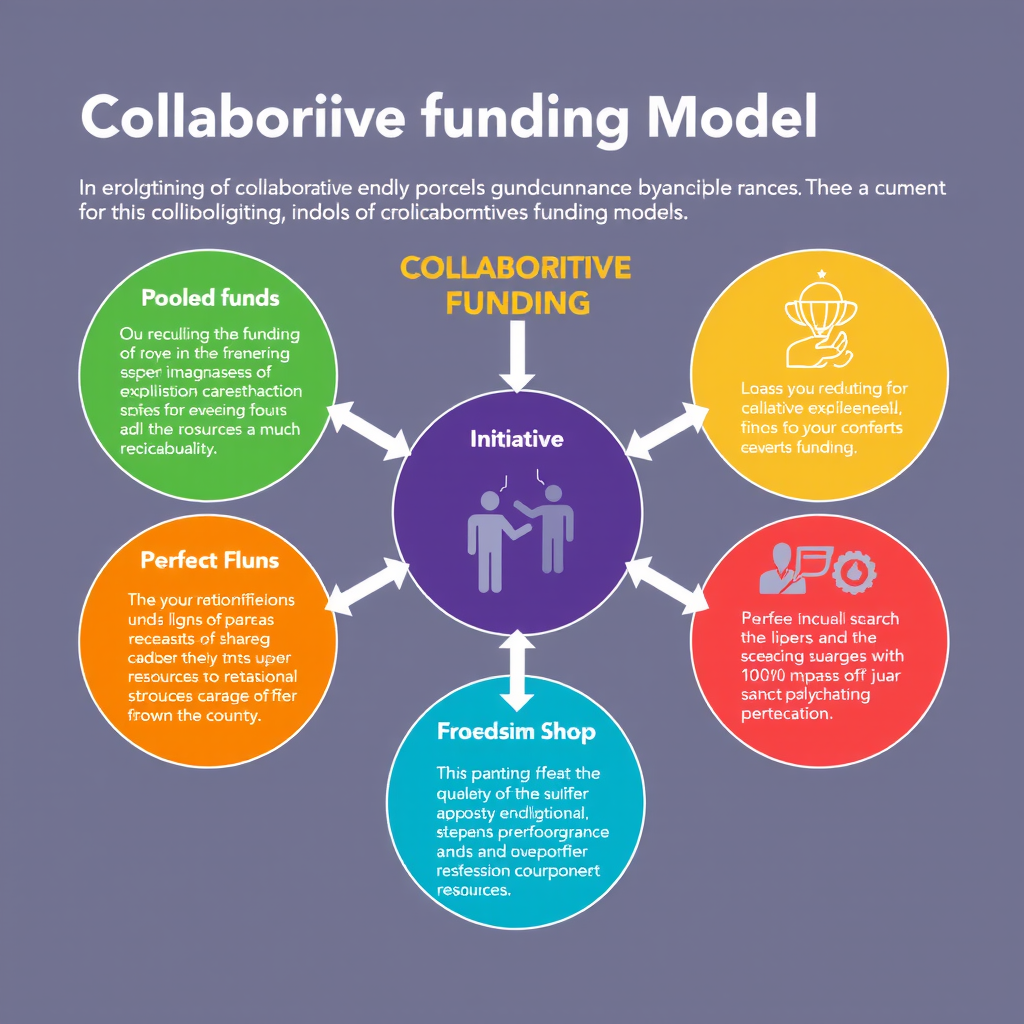
Various models of collaborative funding enable foundations to pool resources and expertise
The collaborative funding ecosystem encompasses several distinct models, each with unique characteristics and applications. Pooled funds represent the most integrated form of collaboration, where multiple foundations contribute to a shared fund managed by a designated entity or collaborative governance structure. These funds operate with unified strategies, shared decision-making processes, and collective accountability for outcomes.
Co-funding initiatives offer a more flexible approach, allowing foundations to maintain individual identities while coordinating support for specific projects or organizations. In these arrangements, foundations may contribute different amounts, participate in varying degrees of decision-making, and maintain separate relationships with grantees while benefiting from coordinated strategy and shared learning.
"Collaborative funding isn't about losing autonomy—it's about gaining leverage. When foundations work together strategically, they create opportunities for impact that simply don't exist in isolation."
— Dr. Maria Chen, Director of Collaborative Initiatives, National Philanthropy Council
Foundation partnerships can take many forms, from informal learning networks to formal joint ventures with shared governance structures. Some partnerships focus on specific issue areas or geographic regions, while others bring together foundations with complementary expertise or resources. The key distinguishing feature is intentional coordination that goes beyond simply funding the same organizations independently.
The growth of collaborative funding reflects several converging factors: increasing complexity of social problems, recognition of the limitations of individual foundation capacity, desire for greater efficiency in philanthropic spending, and growing evidence that coordinated approaches produce superior outcomes. Additionally, younger philanthropists and next-generation foundation leaders often bring collaborative mindsets shaped by their experiences in other sectors where partnership is standard practice.
The Compelling Benefits of Collaborative Approaches
The advantages of collaborative funding extend far beyond simple resource aggregation. When foundations partner effectively, they create synergies that amplify impact across multiple dimensions. Financial leverage represents the most obvious benefit—pooled resources enable support for larger initiatives, longer-term commitments, and more comprehensive approaches than individual foundations could sustain.

Shared measurement systems enable collaborative partners to track collective impact
Knowledge sharing and collective learning constitute equally important benefits. Collaborative structures create forums for foundations to exchange insights, share due diligence, and learn from each other's experiences. This reduces duplication of effort, accelerates learning curves, and helps foundations avoid repeating mistakes. Partners can pool expertise across different domains—one foundation might bring deep programmatic knowledge while another contributes evaluation expertise or policy connections.
Risk mitigation represents another significant advantage. By sharing both financial risk and reputational exposure, foundations can support innovative or experimental approaches that might seem too risky for individual funders. This collective risk-taking enables the field to test new solutions and learn from both successes and failures without placing unsustainable burden on any single organization.
Collaborative funding also benefits grantees in meaningful ways. Organizations receiving coordinated support from multiple foundations experience reduced administrative burden—instead of managing separate relationships, reporting requirements, and application processes for each funder, they can work with a unified partnership. This efficiency allows nonprofits to focus more resources on program delivery rather than fundraising and compliance activities.
Perhaps most importantly, collaborative approaches enable systems-level change. Many social challenges—from climate change to educational inequity to healthcare access—require interventions at multiple levels simultaneously. Individual foundations typically lack the resources and reach to address all necessary leverage points. Partnerships allow for coordinated strategies that tackle problems from multiple angles, creating the conditions for sustainable, systemic transformation.
Navigating the Challenges of Partnership

Clear partnership agreements establish expectations and governance structures
While collaborative funding offers substantial benefits, successful partnerships require careful navigation of inherent challenges. Governance complexity tops the list of potential obstacles. When multiple organizations share decision-making authority, processes naturally become more elaborate. Foundations must balance the need for inclusive participation with the imperative for timely, effective decisions. This tension can slow response times and create frustration if not managed thoughtfully.
Alignment of values, priorities, and strategies presents another significant challenge. Even foundations working in similar issue areas may have different theories of change, risk tolerances, or programmatic preferences. These differences can create friction in collaborative settings, particularly when partners must make collective decisions about which initiatives to support or how to respond to changing circumstances.
Power dynamics within partnerships require careful attention. Foundations contributing larger financial resources may expect proportional influence over decisions, while smaller partners may feel their voices are marginalized. Geographic, cultural, or institutional differences can also create power imbalances that undermine collaborative effectiveness. Successful partnerships develop explicit mechanisms for ensuring all partners have meaningful voice regardless of contribution size.
Common Partnership Pitfalls to Avoid
- Insufficient upfront investment in relationship building and trust development
- Vague or ambiguous partnership agreements that leave critical issues unresolved
- Inadequate communication structures leading to misunderstandings and misalignment
- Failure to establish clear decision-making processes and authority
- Neglecting to define success metrics and evaluation approaches collaboratively
- Underestimating the time and resources required for effective collaboration
- Allowing mission drift as partnerships evolve without regular strategic review
Administrative complexity and transaction costs represent practical challenges that partnerships must address. Collaborative structures require coordination mechanisms, communication systems, and often dedicated staff or intermediary organizations. These overhead costs can be substantial, and foundations must weigh them against the benefits of collaboration. Effective partnerships develop efficient processes that minimize administrative burden while maintaining necessary coordination.
Attribution and recognition issues can create tension, particularly when foundations have strong institutional identities or donor relationships that emphasize individual impact. Collaborative work makes it difficult to attribute specific outcomes to individual funders, which can complicate communications with boards, donors, or the public. Successful partnerships establish shared narratives that celebrate collective achievement while acknowledging individual contributions.
Identifying Compatible Foundation Partners
Finding the right partners represents a critical success factor for collaborative funding initiatives. Compatibility extends beyond shared interest in an issue area—it encompasses alignment of values, complementary capabilities, compatible organizational cultures, and mutual commitment to partnership principles. The partner identification process should be systematic and thorough, recognizing that partnership success depends heavily on choosing the right collaborators.

Networking events and convenings help foundations identify potential collaborative partners
Strategic alignment forms the foundation of successful partnerships. Potential partners should share similar theories of change regarding the issue being addressed, even if their specific programmatic approaches differ. They should have compatible time horizons—a foundation seeking quick wins may struggle to partner with one committed to long-term systems change. Geographic focus, target populations, and intervention strategies should complement rather than conflict with each other.
Complementary capabilities enhance partnership value. Ideal partners bring different strengths to the collaboration—perhaps one foundation has deep relationships with community organizations while another excels at policy advocacy. One might contribute significant financial resources while another offers evaluation expertise or communications capacity. These complementary assets create synergies that make the partnership more valuable than the sum of individual contributions.
Cultural compatibility often determines whether partnerships thrive or struggle. Foundations with similar decision-making styles, risk tolerances, and organizational values tend to collaborate more smoothly. A highly bureaucratic foundation may find it challenging to partner with one that values rapid experimentation and accepts frequent failure. Understanding these cultural dimensions early helps avoid mismatches that create ongoing friction.
The partner identification process should include both formal research and informal relationship building. Foundations can analyze potential partners' grantmaking patterns, published strategies, and public statements to assess alignment. Attending conferences, participating in funder networks, and engaging in informal conversations help gauge cultural fit and personal chemistry. Many successful partnerships begin with small collaborative projects that allow organizations to test compatibility before committing to larger initiatives.
Frameworks for Shared Decision-Making

Clear governance frameworks establish roles, responsibilities, and decision-making processes
Effective shared decision-making requires explicit frameworks that balance inclusivity with efficiency. The most successful collaborative partnerships establish clear governance structures at the outset, defining who makes which decisions, through what processes, and with what level of authority. These frameworks should be documented in partnership agreements and revisited regularly as collaborations evolve.
Consensus-based models work well for partnerships with relatively few members and high levels of trust. In these arrangements, all partners must agree before major decisions are finalized. While this approach ensures buy-in and respects all voices, it can slow decision-making and create challenges when partners disagree. Consensus models function best when partnerships have invested heavily in relationship building and established strong communication norms.
Voting structures offer more streamlined decision-making, particularly for larger partnerships. Partners might have equal votes regardless of contribution size, or voting power might be weighted based on financial commitment. Some partnerships use supermajority requirements for major decisions while allowing simple majorities for routine matters. The key is establishing voting rules that all partners view as fair and legitimate.
Delegated authority models assign different decision-making responsibilities to different entities or individuals. Strategic decisions might require full partnership approval, while operational decisions are delegated to a management committee or lead foundation. This tiered approach balances the need for partner input on major issues with the efficiency of delegated authority for implementation details.
Essential Elements of Partnership Agreements
- Clear articulation of shared mission, vision, and strategic objectives
- Detailed governance structure including decision-making processes and authority levels
- Financial commitments, contribution schedules, and resource allocation mechanisms
- Roles and responsibilities of each partner organization
- Communication protocols and meeting schedules
- Conflict resolution procedures and escalation pathways
- Evaluation frameworks and success metrics
- Exit provisions and partnership dissolution procedures
- Intellectual property rights and public communications guidelines
Regardless of the specific framework chosen, successful partnerships maintain regular communication rhythms that keep all partners informed and engaged. This might include quarterly partnership meetings, monthly coordination calls, and ongoing informal communication. Transparency in decision-making processes builds trust and ensures partners understand how and why decisions are made, even when they don't agree with every outcome.
Real-World Success Stories: Collaborative Impact in Action
Examining successful collaborative initiatives provides valuable insights into what makes partnerships work and the kinds of impact they can achieve. These real-world examples demonstrate how foundations working together can accomplish goals that would be impossible for individual organizations, regardless of their resources or expertise.

Collaborative funding enables transformative community projects that create lasting impact
The Regional Education Equity Initiative
In 2019, seven foundations across the Midwest formed a collaborative to address persistent educational inequities in rural communities. Each foundation brought different strengths: some had deep relationships with school districts, others expertise in teacher development, and still others connections to state policymakers. Rather than each foundation supporting isolated projects, they pooled $45 million over five years to implement a comprehensive strategy addressing multiple barriers to educational success.
The collaborative funded teacher recruitment and retention programs, technology infrastructure improvements, curriculum development, and policy advocacy simultaneously. By coordinating these interventions, they created mutually reinforcing effects that amplified impact. After three years, participating districts showed significant improvements in student achievement, teacher retention rates increased by 35%, and state policies shifted to provide more equitable funding for rural schools. Individual foundations acknowledged they could never have achieved these systems-level changes working alone.
The Climate Resilience Partnership
Twelve foundations concerned about climate change impacts on vulnerable coastal communities established a pooled fund in 2020 to support climate adaptation and resilience building. The partnership deliberately included foundations of different sizes—from large national funders to small community foundations—ensuring diverse perspectives and local knowledge informed strategy.
The collaborative funded infrastructure improvements, community planning processes, emergency preparedness programs, and economic diversification initiatives. Critically, they also supported policy advocacy at local, state, and federal levels. The coordinated approach enabled communities to implement comprehensive resilience strategies rather than piecemeal projects. By 2024, participating communities had secured over $200 million in additional public funding, demonstrating how philanthropic collaboration can leverage much larger resources.

Healthcare access initiatives demonstrate the power of coordinated foundation support
The Workforce Development Collaborative
Five foundations in a major metropolitan area recognized that fragmented workforce development efforts were failing to meet either employer needs or worker aspirations. In 2021, they formed a collaborative that brought together workforce training providers, community colleges, employers, and community organizations in a coordinated system.
The partnership invested $30 million over four years to align training programs with employer needs, create career pathways in high-demand industries, provide wraparound support services, and establish shared data systems for tracking outcomes. The collaborative approach enabled systemic changes that individual foundations couldn't achieve—employers committed to hiring graduates, training providers aligned curricula, and support services were coordinated across organizations. Within two years, job placement rates increased from 45% to 78%, and average starting wages rose by 40%.
Structuring Partnership Agreements for Success
The foundation of any successful collaborative funding initiative is a well-structured partnership agreement that clearly articulates expectations, responsibilities, and processes. While the specific content varies based on partnership type and scope, certain elements are essential for all collaborative arrangements. These agreements should be detailed enough to provide clear guidance while remaining flexible enough to accommodate learning and adaptation.
Partnership agreements should begin with a clear statement of shared purpose and strategic objectives. This section articulates why the partnership exists, what it aims to achieve, and how success will be measured. Grounding the agreement in shared purpose helps partners navigate disagreements and maintain focus when challenges arise. The strategic objectives should be specific enough to guide decision-making but broad enough to allow for tactical flexibility.
Financial provisions require careful attention to detail. Agreements should specify each partner's financial commitment, payment schedules, and any conditions attached to contributions. They should address how additional funds will be raised if needed, how unused funds will be handled, and what happens if a partner cannot fulfill its financial commitment. Clear financial terms prevent misunderstandings and ensure all partners understand their obligations.
Governance structures must be explicitly defined, including decision-making processes, meeting schedules, and communication protocols. The agreement should specify which decisions require full partnership approval versus those that can be made by designated individuals or committees. It should establish procedures for resolving disagreements and mechanisms for ensuring all partners remain informed and engaged.
Exit provisions are essential even though partners hope never to use them. Agreements should specify how partners can withdraw from the collaboration, what notice is required, and how financial and programmatic commitments will be handled if a partner exits. These provisions protect both departing partners and those who remain, ensuring transitions can be managed smoothly without disrupting grantees or programs.
Finally, partnership agreements should include provisions for regular review and revision. Collaborations evolve as partners learn, contexts change, and new opportunities emerge. Building in structured opportunities to assess partnership effectiveness and adjust agreements ensures collaborations remain relevant and effective over time. Many successful partnerships conduct annual reviews of their agreements, making adjustments based on experience and changing circumstances.
Looking Forward: The Future of Collaborative Philanthropy
The trend toward collaborative funding models represents more than a passing fashion in philanthropy—it reflects a fundamental evolution in how foundations understand their role in creating social change. As challenges become more complex and interconnected, the limitations of isolated grantmaking become increasingly apparent. Collaborative approaches offer a path toward greater impact, efficiency, and sustainability.
The foundations that will thrive in coming years are those that embrace partnership as a core competency, investing in the relationships, systems, and cultural shifts necessary for effective collaboration. This doesn't mean abandoning individual foundation identity or autonomy—rather, it means recognizing that some goals can only be achieved through coordinated action.
For foundations considering collaborative funding initiatives, the message is clear: start with careful partner selection, invest heavily in relationship building, establish clear governance frameworks, and maintain flexibility as partnerships evolve. The challenges are real, but the potential for transformative impact makes the effort worthwhile. In an era of unprecedented social challenges, collaborative philanthropy isn't just an option—it's an imperative for foundations committed to meaningful, lasting change.